
Hydro Jetting Services in Oklahoma City & OKC Metro
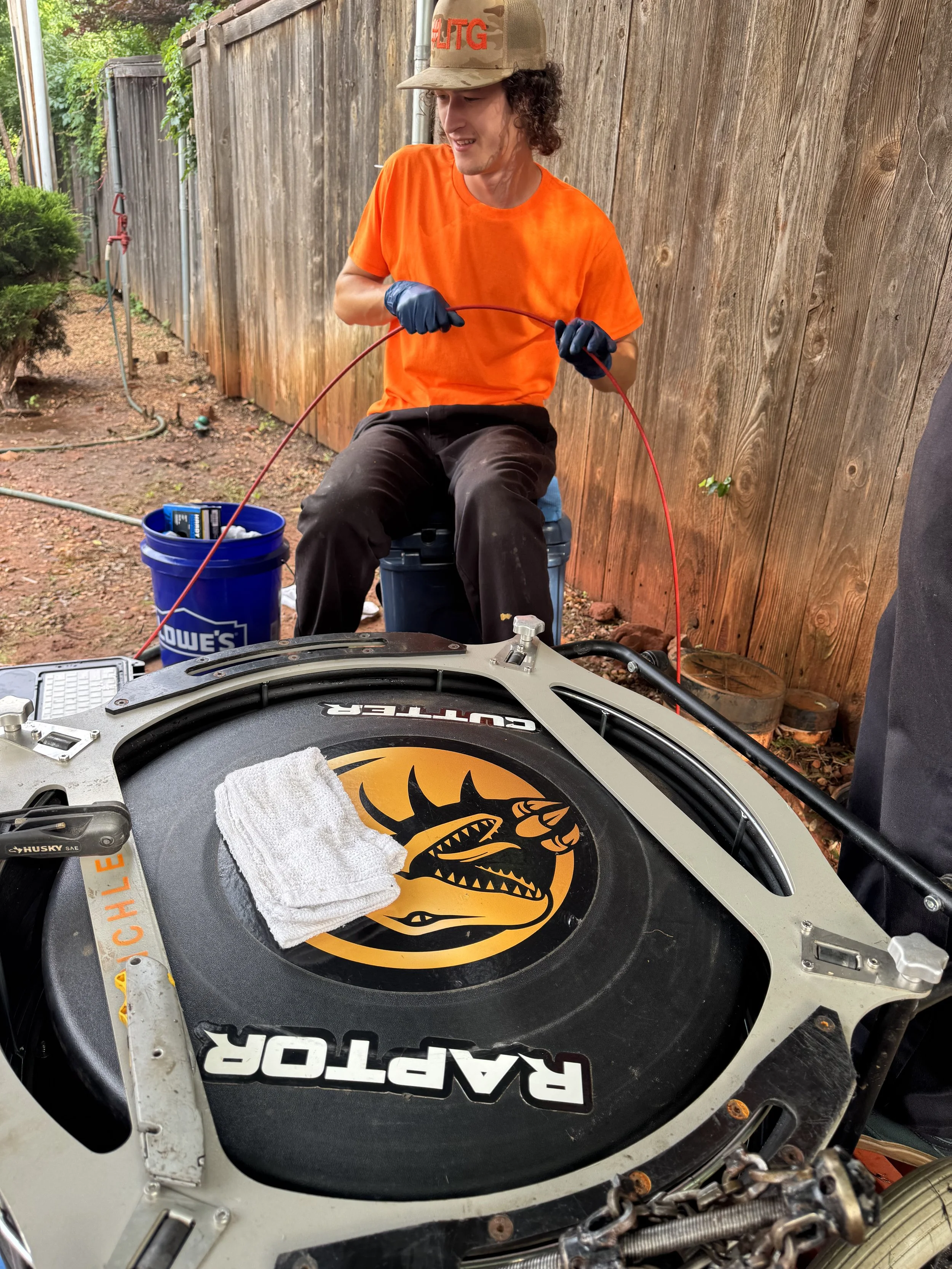
What is Hydro Jetting?
Hydro jetting uses highly pressurized water — typically 3,000 to 4,000 PSI — to clear buildup from the interior walls of sewer lines and pipes. Unlike mechanical snaking, which punches a hole through a clog, hydro jetting cleans the entire pipe interior from wall to wall, removing grease accumulation, mineral scale, silt, debris, and root masses.
The result is a pipe that’s functionally clean — restored to near full flow capacity. And when pipe lining is the next step, hydro jetting is the required preparation: a CIPP liner bonds to the pipe wall, and that surface needs to be free of buildup before the liner is installed.
📞 Call 405-689-7779 to schedule service or request an evaluation.
How does Hydro Jetting work?
Hydro jetting uses specialized equipment to send high-pressure water through sewer and drain lines, clearing blockages and cleaning the interior of the pipe.
Unlike basic snaking, hydro jetting cleans the entire pipe diameter, helping restore proper flow and reduce recurring drain issues.
Benefits of Hydro Jetting
Clears severe blockages
Restores full pipe flow
Reduces recurring clogs
No harsh chemicals
Effective for residential and commercial lines
Ideal for preventative maintenance
When Hydro Jetting Is the Right Solution
Hydro jetting is the right tool when recurring backups have returned despite previous clearing attempts, when a camera inspection shows heavy grease accumulation or root intrusion, or when a pipe is being prepared for CIPP lining. It’s also the appropriate choice for commercial kitchen lines with grease buildup and for any line where mechanical snaking has failed to produce lasting results.
In Oklahoma City and the OKC metro, two conditions make hydro jetting particularly common: the city’s mature tree canopy means root intrusion is one of the most frequent causes of recurring pipe blockages, and Oklahoma’s clay soil contracts and expands with seasonal moisture changes — shifting pipe joints over time and creating exactly the kind of gaps roots seek out. If your line has been snaked more than once for the same problem, jetting is typically the more effective and longer-lasting solution.
How Our Hydro Jetting Process Works
Every hydro jetting job starts with a pipeline camera inspection. We run a camera through the line first to assess what we’re dealing with — the nature of the blockage, the pipe material, and whether any structural damage is present. Hydro jetting is not appropriate for pipes with significant cracking, joint separation, or wall deterioration; pressurized water can worsen existing structural damage. The camera inspection tells us whether jetting is safe and effective before we run the hose.
Once confirmed, we select the appropriate nozzle configuration for the job — rotating nozzles for scale and grease, forward-cutting nozzles for root penetration — and feed the hose into the line. High-pressure water pushes debris and buildup downstream and out of the system. After jetting, we run the camera again to confirm the line is clear and assess the pipe condition for any follow-on work.
HYDRO JETTING VS. STANDARD PIPE CLEANING
Standard mechanical snaking uses a rotating cable to physically push through or pull out a blockage. It works for simple, localized clogs, and it’s faster for straightforward jobs. But snaking doesn’t clean the pipe walls — it doesn’t remove grease buildup, doesn’t fully clear root intrusion, and doesn’t address the accumulation that causes recurring backups. The clog tends to come back.
Hydro jetting clears the entire pipe interior from wall to wall. For pipes with recurring issues, heavy scale, root penetration, or any line being prepped for CIPP lining, jetting produces results that snaking cannot match. The tradeoff is that jetting requires a camera inspection first — it’s not a drop-in replacement for snaking on every job, but for problem lines, it’s the right tool.
HYDRO JETTING AS PREP FOR PIPE LINING
If a camera inspection reveals that a sewer line needs more than cleaning — root damage, pipe deterioration, joint separation, or cracking — hydro jetting is step one of the rehabilitation process. We jet the line first to clear the interior completely, then install a CIPP liner that seals cracks, eliminates root entry points, and restores the pipe’s structural integrity for 50+ years.
This is a different scope of work from a routine clearing call. Hydro jetting as prep for pipe lining is part of a permanent rehabilitation solution — not a temporary fix to restore flow. If your camera inspection reveals structural issues alongside the buildup, we’ll scope the full project so you understand exactly what’s involved before any work begins.
SERVING OKLAHOMA CITY & OKC METRO
Trenchless Solutions proudly serves:
Oklahoma City, Edmond, Norman, Moore, Yukon, Mustang, Midwest City, Del City, Choctaw, and surrounding OKC metro communities.
Schedule Hydro Jetting Service
If you’re dealing with slow drains, recurring backups, or heavy buildup, hydro jetting may be the solution.
📞 Call 405-689-7779
Clear lines. Better flow. Long-term results.
FREQUENTLY ASKED QUESTIONS — HYDRO JETTING OKC
-
Only if the pipes are already structurally compromised — which is exactly why we run a camera inspection before jetting every time. If a pipe has significant cracking, joint separation, or wall deterioration, we’ll tell you before we run the hose. Hydro jetting on a structurally sound pipe is safe and effective.
-
Snaking punches a hole through a blockage. Hydro jetting clears the entire pipe interior from wall to wall. For recurring problems, heavy scale, or root intrusion, jetting produces lasting results that snaking typically cannot. Snaking is faster for simple, localized clogs — jetting is the right call for persistent or complex blockage issues.
-
Yes — hydro jetting can remove root masses that have grown into the pipe interior. However, if roots have caused structural damage to the pipe wall, jetting alone won’t fix the underlying problem. In that case, pipe lining is the appropriate next step after jetting clears the roots and preps the surface.
-
For a standard residential sewer line (50–100 feet), jetting typically takes 1–2 hours including the pre-jet camera pass. Commercial lines with heavy grease accumulation or longer runs may take longer. We’ll give you a time estimate once we’ve run the initial camera inspection.
-
No. Hydro jetting is a no-dig service. The hose is fed through an existing cleanout access point — no excavation required in most cases. If your property doesn’t have an accessible cleanout, we’ll advise you on options before scheduling the job.